Friday, 6 December 2013

Rosemary for Rememberance

Remembering Nelson Mandela a truly remarkable man.


Happy gardening

Bronwyn

Thursday, 5 December 2013

Fuchsias a delight in the garden

Fuchsias are very  popular garden plants and are extremely versatile, growing in shaded gardens or in hanging baskets and pots. However, they do need a little helping hand during hot summer periods.     
Water your fuchsias at least twice a day when the temperatures start to go over 26c, you may find if it goes higher you will need to water more frequently.  If a fuchsia in a pot or basket dries out, plunge the container into a bucket of water and leave it until there are no bubbles coming to the surface. This helps revive the plant and thoroughly re-wets the potting mix. 


They respond well to light pruning at any time, especially in pots or hanging baskets, but hard pruning is better to be done in late winter, cutting back to the original framework of branches. In warm climates prune again in summer after the main flush which will encourage a second flush of flowers in autumn. As with most plants regularly tip prune  to encourage bushy growth.


If your plant is becoming pot bound it may be necessary to take the plant out, knock of the soil, clip the roots by a third and replant in the same size pot/basket.  Remember to reduce the foliage as well by a third and do this in winter.


My fuchsia is now 2 years old and has responded well to being in a pot and regular pruning as you can see in the pictures.

They may take a little extra effort but the displays they give are amazing.


Happy gardening

Bronwyn

Wednesday, 4 December 2013

Transplanting shrubs - the dos and don'ts

Did you know that when you transplant shrubs you should cut them back by a third.  This allows the plant to concentrate on developing a health root system.


We recently transplanted this Blue Butterfly bush (Clerodendrum ugandense)  because the spot it was in became too wet in the rainy season.

Make sure the hole it is going into is twice the size of the root ball, remembering to keep the plant at the same level when its in the new hole.  Put some composed in the bottom of the hole to give the plant  a good start and top up with a rich soil mix.  Mulch, fertilise and water regularly for the first couple of weeks until it has established itself, you will know because it will start to put out new shoots.

Below is the same bush after pruning looking quite happy in its new position.


The transplanting took place 3 weeks ago and it now has new shoots appearing, a very contented plant.


Happy gardening

Bronwyn


Monday, 2 December 2013

Basic gardening tip - Frangipanis a delight in the garden

 Walking  around our neighbourhood at the moment is an arrangement in Frangipanis.  Always seen in  older gardens but a row of evergreen frangipanis can look just as good in a modern setting. They flower from November to May, in Queensland,  I don't think you could find a better plant for the tropical or subtropical garden than frangipani.


I plant them in amongst other trees and shrubs as mine are deciduous and look better in the winter after leaf loss.


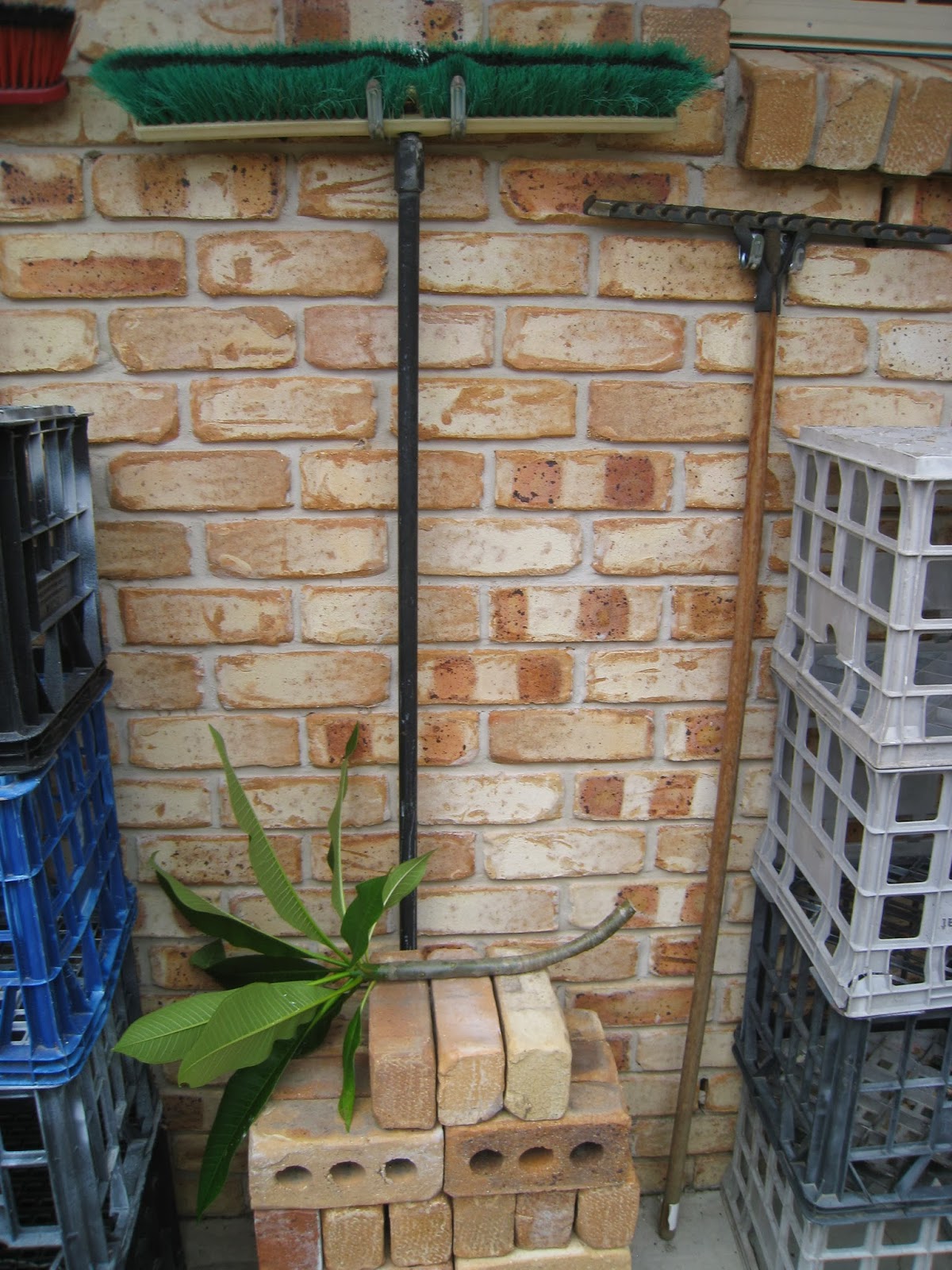
Propagating frangipani is so simple and is done usually in the winter months, although I have left it until as late as October in Adelaide which has a colder climate, when sap movement is at its least. Take a piece of hardwood about 300 millimetres long. Leave the cutting in the sun for a couple of weeks to dry out and then put into some good potting mix. Within a few weeks it will have formed roots, how easy is that.  The secret is letting it dry out for those two weeks.  Wash your hands if you get any of the sticky white sap on you as it might irritate.


Over the last few years rust has become a major problem with frangipanis, and it causes yellow orange pustules to appear on the underside of the leaf. The other side of the leaf becomes almost transparent. Spray with a copper based spray before it appears, and gather up all the leaves that fall on the ground to help minimise it. But recently some frangipani trees have built up a resistance to rust, so hopefully we won't have to spray much longer.


They are a wonderful addition to any garden for the beautiful flowers and fragrance.


Happy gardening


Bronwyn

Basic gardening tips - Water bird and dragons

The last few days have seen an influx of wild life into the garden in the form of birds and water dragons.  It is great to walk outside to see the dragons sunning themselves on the lawn.


Pelicans are  such  majestic birds and seem to be coming to the lake more and more, maybe because we have been having very rough seas lately, who knows we just take of advantage of their visits.


The ducks and swans are always there as are the sea gulls, such a delight.

It's the garden that brings them in as there is plenty of food to scavenge in the form of bugs and worms. With ducks you just have to watch where you walk, but a small price to pay.


Happy gardening

Bronwyn

Saturday, 30 November 2013

Basic gardening tips - Petunias

I adore petunias and it wouldn't be a summer garden without them but, planning your planting will ensure the best displays when you want them.


It's very simply!  Petunias when planted as seedlings will take about 6 weeks to start producing an abundance of beautiful flowers.  While they are establishing it is best to nip off newly forming flowers for about the first 2-3 weeks.  This allows the seedlings to establish strong root growth and become sturdy plants, which will reward you with a wonderful summer display.


 I planted these little seedlings recently behind an establish white petunia to get a more uniform display.  The blue and white petunias have been in 4 weeks, and they are starting to bush out nicely.
 
Petunias also come  in what the nurseries call "pots of colour", these are larger more establish plants that  provide an instance display.  Depending on how quickly you want your floral display will determine whether you buy seedlings or "pots of colour", of course there is a price difference and you get more for your dollar with the seedlings.


I use both, planting out for an instant colour display while waiting for the smaller seedlings to develop. 

However you choose to plant your petunias they are a must for any garden, with a wide range of colours and shapes.


Do yourself a favour and plant petunias
 
Happy gardening
 
Bronwyn

Basic gardening tip - hydrangeas

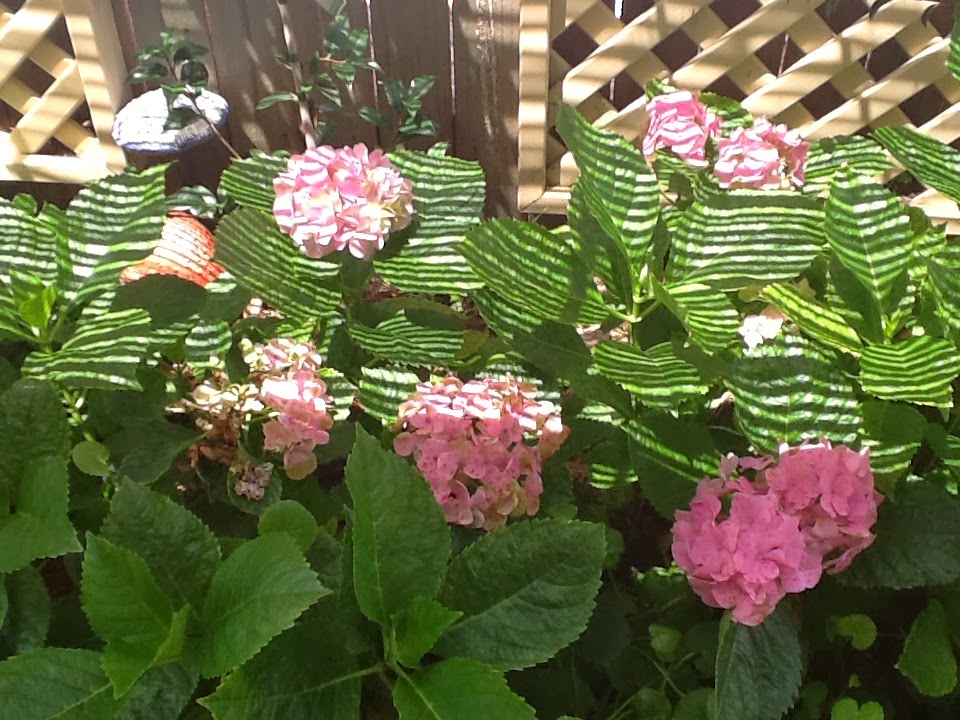
The Hydrangeas are looking very pretty at the moment, but they are all pink.   My fault because I didn't  test the pH levels and adjust according to the colour I wanted.


Hydrangeas are fascinating in that, unlike most other plants, the colour of their flowers can change dramatically.   Blue require a more acidic soil and pink nitrogen rich soil.  I also use Hydrangea Pinking and Blueing to enhance the colour.  Although I only applied the colouring mixture once this season there are a few flowers that have a speckling of purple, which means that they were trying to change colour but didn't have the right soil balance.


 It is easier to control the colour of  hydrangeas if they are grown in containers because you can control or alter the pH of the soil in a container better than it is in the ground.


On the other hand, hydrangeas often change colour on their own when they are planted or transplanted. They will adjust to the new environment very quickly.   It is not unusual to see several different colours on one shrub the next year after planting.

After flowering and in the Autumn cut them back hard and they will respond  brilliantly next spring/summer.


Happy gardening

Bronwyn